
Last updated September 24, 2026
Free in-home measure and quote - PGT, CGI and CWS impact lines compared on your actual openings, style by style
 Before
 After
After Before
 After
After Before
 After
AfterWindows & Doors Warning Signs: A West Palm Beach Homeowner’s Reference Guide
Condensation on your impact window in July does not mean the seal has failed. In West Palm Beach, where exterior air routinely hits 95°F against 72°F interior glass, surface condensation is physics, not pathology. Replace that unit and the same film will reappear next summer. We’ve seen this exact misdiagnosis cost homeowners $400-$800 for unnecessary replacements. This guide translates generic window and door failure symptoms into their specific South Florida causes, distinguishes product failure from structural failure, and names repair-versus-replace cost thresholds in dollars so you can make an informed decision rather than defaulting to full replacement. For a deeper dive, see The Complete Guide to Windows & Doors in West Palm Beach.
Quick Answer
The warning signs that a West Palm Beach window or door needs attention fall into five categories: glass symptoms (condensation location, coating failure, stress cracks), frame symptoms (corrosion pattern, joint separation, weep obstruction), hardware symptoms (roller play, lock mechanism wear, track deformation), seal symptoms (air infiltration measured by draft, water staining location), and structural symptoms (slab movement, buck failure, out-of-square openings). The critical distinction in South Florida is that humidity, salt air, and slab-on-grade construction create failure patterns that differ markedly from northern climates. Acting at first warning typically costs $150-$400 for repair; delaying 18 months often pushes the same opening to $1,200-$3,500 for full replacement.
Table of Contents
- Condensation Decoded: What Moisture Location Actually Means in West Palm Beach Humidity
- Frame Corrosion Patterns: Aluminum, Vinyl, and Impact-Rated Systems
- Structural Buck Failure vs. Product Failure: Three Warning Signs That Change Everything
- Water Staining Inside the Frame: A Location-Based Diagnostic
- Impact Sliding Door Hardware: The Play Measurements That Precede Lock Failure
- Repair vs. Replace: Cost Thresholds for West Palm Beach Homeowners
- Common Mistakes to Avoid
- When to Call a Professional
- Frequently Asked Questions
 Before
 After
AfterCondensation Decoded: What Moisture Location Actually Means in West Palm Beach Humidity
Not all condensation signals the same problem. In West Palm Beach’s 85% average humidity, location is diagnostic.
Interior Surface Condensation
Moisture on the room-facing glass surface in summer indicates high indoor humidity against cold glass, not a failed window. Your air conditioning is working. Solutions: run bath and kitchen exhaust fans, check dryer vent termination, or reduce humidifier settings. We’ve measured interior surface temperatures on newly installed windows in West Palm Beach at 55°F when ambient interior humidity exceeds 60%. The glass is a dehumidifier by accident. Replacing the unit fixes nothing.
Exterior Surface Condensation
Moisture on the outdoor glass surface, typically morning condensation that burns off by 10 AM, is normal and desirable. It means your low-E coating is reflecting infrared back into the home. The exterior glass is the cold surface, so dew forms there rather than inside. No action needed.
Between-the-Pane Condensation
Fog or droplets inside an insulated glass unit (IGU) indicate seal failure. The desiccant between panes is saturated. In West Palm Beach, this accelerates when daily thermal cycling stresses the edge seal, 30-40°F swings from morning lows to afternoon highs. Once fog appears, the IGU’s insulating value is compromised and the low-E coating may oxidize. Replacement cost for a standard double-hung IGU: $280-$520 installed. For impact-rated units from manufacturers like CGI or ES Windows, expect $450-$780 due to laminated glass requirements and Miami-Dade HVHZ certification.
Condensation on the Frame
Moisture on the vinyl or aluminum frame itself, not the glass, signals thermal bridging at the frame edge or missing insulation in the rough opening. In West Palm Beach homes built 2015-2020, we’ve found this commonly at retrofit installations where the original window was smaller and the new frame sits against uninsulated block. The fix is not a new window; it’s proper backer rod and sealant at the frame-to-wall interface, plus low-expansion foam if accessible. Cost: $120-$250 per opening.
Quick Diagnostic Table
| Condensation Location | Meaning in West Palm Beach | Action Required | Cost Range |
|---|---|---|---|
| Interior glass surface, summer | High indoor humidity vs. cold AC glass | Humidity control, not window replacement | $0-$80 (dehumidifier/fan) |
| Exterior glass surface, morning | Low-E coating functioning normally | None | $0 |
| Between panes (fog, droplets, haze) | IGU seal failure | IGU replacement or sash replacement | $280-$780 |
| On frame, not glass | Thermal bridging at frame-wall interface | Sealant, backer rod, insulation | $120-$250 |
Frame Corrosion Patterns: Aluminum, Vinyl, and Impact-Rated Systems
West Palm Beach’s salt air creates distinct corrosion signatures depending on frame material, proximity to the Intracoastal, and whether the home faces east (prevailing salt-laden winds) or west.
Aluminum Frame Corrosion
Standard aluminum windows in coastal West Palm Beach neighborhoods like El Cid, Flamingo Park, and the Northwood Historic District show pitting first at the sill nose and meeting rail, where salt deposits concentrate and remain longest after rain. Anodized aluminum resists this longer; mill-finish aluminum shows pitting in 7-10 years within a mile of salt water. The critical measurement is pit depth: surface etching under 0.010 inch is cosmetic. Pitting that penetrates the wall thickness or creates white powdery oxide buildup at joints indicates structural compromise. At that stage, the frame’s ability to hold impact-rated glass under design pressure loads is uncertain.
Impact-rated aluminum frames from PGT and CGI use thicker extrusions and marine-grade anodizing (typically 0.0007 inch or greater). We’ve documented these frames at 15+ years in waterfront West Palm Beach homes with only surface oxidation. The difference is specification, not magic.
Vinyl Frame Degradation
Vinyl does not corrode, but it does degrade. The warning signs in South Florida are different from northern climates: chalking (surface oxidation that whitens and powders), UV-induced brittleness at corners and weld joints, and thermal expansion cycling that loosens mechanical corners. Dark-colored vinyl absorbs more solar heat, accelerating the cycle. We’ve measured vinyl frame surface temperatures at 140°F in direct West Palm Beach afternoon sun. Expansion and contraction at that range stress corner welds and glazing bead retention.
The specific failure mode to watch: glazing bead pop-out. If the flexible vinyl strip that retains the glass begins to protrude or separate, the glass edge is exposed to wind load. On impact-rated units, this compromises the design pressure rating and may affect insurance compliance.
Impact-Rated Frame Specifics
Impact frames incorporate reinforced corners and heavier walls to meet Miami-Dade HVHZ requirements. The warning signs here are subtle: corner joint separation (visible as a hairline crack in the frame corner, not the caulk joint), screw port elongation where fasteners have worked loose under cyclic wind load, and delamination of the frame reinforcement from the vinyl or aluminum shell. These require trained inspection; the consequences of failure during a named storm are structural, not merely inconvenient.
Structural Buck Failure vs. Product Failure: Three Warning Signs That Change Everything
This distinction determines whether you’re buying a window or hiring a structural engineer. The repair pathway and cost diverge by a factor of 10.
Sign 1: Diagonal Corner Cracks in the Wall, Not the Frame
Cracks radiating from the upper corners of a window or door rough opening, continuing into the surrounding wall surface, indicate structural movement. In West Palm Beach’s slab-on-grade construction on sandy soils, this typically means differential settlement or slab heave from seasonal water table changes. The window frame is not failing; the wall is moving around it. We’ve measured openings out of square by 3/8 inch or more in homes near the Lake Worth Lagoon where fill soils consolidated unevenly.
Product failure correction: replace the window, $800-$2,400. Structural failure correction: underpin, relevel, or accept and install a flexible frame system, $4,000-$15,000+. The diagnostic step is measuring the frame for square. If the frame is square but the wall cracks continue, it’s structural. If the frame is racked and the wall is intact, it’s product or installation failure.
Sign 2: Consistent Pattern Across Multiple Openings on One Elevation
When every window on the east-facing wall shows the same symptom, suspect structural or environmental cause, not random product defect. We’ve documented entire elevations in West Palm Beach’s historic districts where original 1920s wood windows were replaced with aluminum units in the 1980s, all now showing identical corner separation. The cause was not the windows; it was the absence of expansion joints in a 40-foot masonry wall that moves thermally. The correct fix was structural accommodation, not 12 new windows.
Sign 3: Door Frame Separation from Floor or Header
A patio door or entry door frame that has visibly pulled away from the threshold or head jamb, creating a gap that changes seasonally, indicates slab movement or inadequate header support. In West Palm Beach, this is common in additions built on post-tensioned slabs where the original foundation and addition settle at different rates. The door hardware, rollers, and lock mechanism are not at fault. Adjusting or replacing them provides temporary function at best.
The specific measurement: place a level on the threshold. If the bubble reads level but the frame gap is visible, the slab is flat but the wall has racked. If the threshold itself is out of level, the slab has moved. Either way, a new door installs on the same compromised substrate.
Diagnostic Protocol
- Photograph the symptom with a ruler or coin for scale.
- Measure the opening diagonally in both directions. Difference over 1/4 inch in a standard window, 3/8 inch in a door, suggests structural involvement.
- Check adjacent openings on the same wall for matching patterns.
- Inspect exterior grade and drainage at the foundation line; water concentration accelerates settlement.
- Document with dated photos before seasonal change, then re-measure in six months.
Water Staining Inside the Frame: A Location-Based Diagnostic
Water stains on interior window surfaces are not generic “leaks.” The location maps directly to cause and cure.
Bottom Rail Staining
Stains on the horizontal interior surface at the bottom of the window frame indicate weep system failure. Impact-rated and non-impact windows alike incorporate weep holes, small openings that drain infiltrated water back to the exterior. In West Palm Beach, these clog with salt residue, pollen, and insect debris. The water that should exit pools in the sill track and overflows to the interior.
The fix is not window replacement. Clean weep holes with a pipe cleaner or compressed air, verify the exterior weep flap or baffle is intact, and confirm positive slope to the exterior. Cost: $0 if DIY, $85-$150 if serviced. We’ve found this condition in roughly 30% of West Palm Beach homes we survey, particularly those with landscaping irrigation that sprays frame surfaces.
Corner Joint Staining
Stains at the lower corners of the frame, where vertical and horizontal members meet, indicate sealant failure at the frame joint or between frame and wall. The critical distinction: frame joint sealant failure is repairable with removal and reapplication of compatible sealant. Frame-to-wall sealant failure requires accessing the exterior perimeter, which may involve ladder work or scaffolding on second stories.
In West Palm Beach’s UV exposure, exterior sealant typically degrades in 7-12 years depending on product quality. We’ve documented silicone sealants lasting 15+ years when properly applied to clean, primed surfaces, while economy acrylic latex products fail in 3-5 years. The stain location tells you which sealant failed: corner stain means frame joint; spread stain along the perimeter means frame-to-wall.
Head Flashing Staining
Stains at the top of the window frame, sometimes appearing as vertical streaks from the header down, indicate flashing failure above the window. This is installation defect, not product defect. The head flashing, a metal or membrane strip that diverts water from the wall cavity over the window head, is missing, improperly lapped, or punctured.
This is the most expensive water stain to correct because it requires removing siding or stucco to access and properly install flashing. In West Palm Beach’s wind-driven rain environment, this detail is critical. We’ve inspected homes in the South End where repeated “window leaks” were actually head flashing omissions in original construction, with three replacement window installations failing to identify the root cause. Correct repair: $800-$2,500 depending on wall finish and access. Window replacement alone: $0 benefit.
Staining Diagnostic Summary
| Stain Location | Cause | Repair Type | Cost Range |
|---|---|---|---|
| Bottom rail, center | Weep obstruction | Clean/replace weep system | $0-$150 |
| Lower corners | Frame joint or frame-to-wall sealant | Sealant removal and replacement | $150-$450 |
| Top of frame, vertical streaks | Head flashing failure | Flashing repair, wall finish restoration | $800-$2,500 |
Impact Sliding Door Hardware: The Play Measurements That Precede Lock Failure
Impact sliding doors in West Palm Beach carry Miami-Dade HVHZ certification that depends on proper hardware function. Lock mechanism failure rarely occurs without warning; specific play measurements predict it.
Roller Play and Door Drop
The sliding panel rides on tandem rollers in a bottom track. As rollers wear, the door drops vertically. Measure this: with the door closed, check the gap between the top of the sliding panel and the head track. Specification is typically 1/8-3/16 inch. When this gap closes to contact or the panel scrapes the sill, roller replacement is needed, not optional.
We’ve measured roller wear in West Palm Beach homes at 0.030-0.050 inch diameter loss after 8-12 years of operation on sand-contaminated tracks. The sand is the factor; homes near the beach or with unpaved rear yards see accelerated wear. Roller replacement on a standard 6-foot impact slider: $180-$340. Delaying until the track itself is damaged by metal-on-metal contact: $450-$890 for track replacement, plus rollers.
Latch-to-Strike Misalignment
The latch mechanism engages a strike plate on the jamb. As rollers wear and the door drops, the latch no longer aligns with the strike. Homeowners compensate by lifting the door handle to force engagement. This stresses the lock mechanism and eventually cracks the internal cast components.
The measurement: close the door without lifting the handle. Attempt latch engagement. If the latch misses the strike by more than 1/16 inch vertically, or requires handle lift to engage, the root cause is roller wear, not lock failure. Replacing the lock without addressing rollers wastes $200-$400 and repeats in 18 months.
Handle Play and Internal Mechanism Wear
Handle wobble perpendicular to the door face, more than 1/8 inch, indicates worn bushings or cracked internal linkage. On multi-point lock systems common in impact-rated doors from CWS and ECO Window Systems, this play distributes unevenly to the locking points. Some engage fully, others partially. The door may appear secure but fails design pressure testing and may not meet insurance requirements for hurricane protection.
Track Deformation
The bottom track itself deforms from roller impact, debris accumulation, and thermal expansion. We’ve replaced tracks in West Palm Beach homes where homeowners rolled hurricane shutters over the threshold, denting the track surface. The specific symptom: rhythmic bumping as the door rolls, or visible flat spots in the track crown. Track replacement requires panel removal and reinstallation; on impact-rated units, this triggers re-certification documentation requirements.
Repair vs. Replace: Cost Thresholds for West Palm Beach Homeowners
The decision framework that prevents unnecessary replacement and flags when replacement is the only rational choice.
Repair-Favorable Conditions
- Single-component failure: IGU seal, roller, lock mechanism, weep system, sealant joint. Component cost under $400, labor under $300.
- Frame integrity intact: no corrosion penetration, no corner separation, no thermal break breach in aluminum.
- Product still manufactured: replacement sashes, hardware, and parts available from PGT, CGI, CWS, or original supplier.
- Installation defect correctable: flashing, shimming, or sealant error fixable without frame removal.
- Energy performance adequate: U-factor and SHGC meet current needs or are within 15% of replacement options.
Replace-Favorable Conditions
- Structural frame compromise: corrosion through-wall, corner weld failure, reinforcement delamination.
- Obsolete product: manufacturer out of business, no parts availability, non-standard sizes.
- Multiple concurrent failures: IGU seal failure plus frame corrosion plus hardware obsolescence. Repair cost approaches 60%+ of replacement.
- Energy performance gap: single-pane or early low-E units with U-factor above 0.50, versus current 0.30-0.35 options with measurable cooling cost reduction.
- Insurance or code compliance requirement: pre-2002 non-impact units in HVHZ zones, non-compliant egress, or failed windstorm inspection.
Cost Threshold Table
| Scenario | Repair Cost | Replacement Cost | Decision Rule |
|---|---|---|---|
| IGU seal failure, standard window | $280-$520 | $800-$1,400 | Repair if frame and hardware sound |
| IGU seal failure, impact-rated window | $450-$780 | $1,200-$2,400 | Repair if frame and hardware sound |
| Roller replacement, impact slider | $180-$340 | $2,800-$4,500 | Repair unless track also damaged |
| Lock mechanism, multi-point | $200-$400 | $2,800-$4,500 | Repair after verifying roller alignment |
| Frame corrosion, aluminum, pitting through-wall | Not repairable | $1,200-$2,400 | Replace; structural integrity compromised |
| Head flashing failure with stucco repair | $800-$2,500 | $800-$2,500 plus window cost | Repair flashing, replace window only if also failing |
| Obsolete product, no parts available | Not possible | $800-$2,400 | Replace; document for future owners |
The 60% rule is a useful heuristic: when repair estimates exceed 60% of replacement cost for the same opening, replacement typically offers better long-term value. The exception is impact-rated units where the frame remains sound; repair preserves the original HVHZ certification documentation, which replacement requires regenerating.
Common Mistakes to Avoid
- Replacing a window for interior condensation in summer. This is humidity control, not window failure. We’ve surveyed West Palm Beach homes where three previous contractors recommended full replacement for this exact symptom. The correct fix costs under $100.
- Applying caulk over weep holes. Homeowners and even some painters seal weep holes thinking they’re gaps. This traps water in the frame and guarantees interior staining. Weep holes are intentional drainage; they stay open.
- Ignoring roller wear until the lock fails. The lock failure is a symptom. Replace rollers at first handle-lift requirement and the lock lasts the design life. We’ve replaced $400 lock mechanisms that failed only because $200 roller wear was ignored for two years.
- Assuming all water stains mean “new window needed.” Location matters. Bottom rail staining is a $150 weep cleaning. Head flashing staining is an $1,800 wall repair. Neither requires window replacement unless the frame has been wet long enough to corrode.
- Buying replacement windows without verifying structural square. A new window installs in the same out-of-square opening and shows the same gaps, cracks, and operational problems. Measure first, specify second.
- Neglecting to document pre-existing conditions. In West Palm Beach’s active real estate market, window condition affects disclosure and valuation. Dated photos of stains, cracks, and hardware function protect seller and buyer. Our documented photo record on every visit serves this purpose.
- Choosing replacement based on brand recognition alone. The correct specification depends on opening size, exposure, design pressure requirement, and energy target. We’ve specified CWS for coastal exposure with high DP requirements, ECO Window Systems for energy-focused retrofits, and ES Windows for custom geometric openings where standard sizes don’t fit. The brand serves the opening, not the reverse.
When to Call a Professional
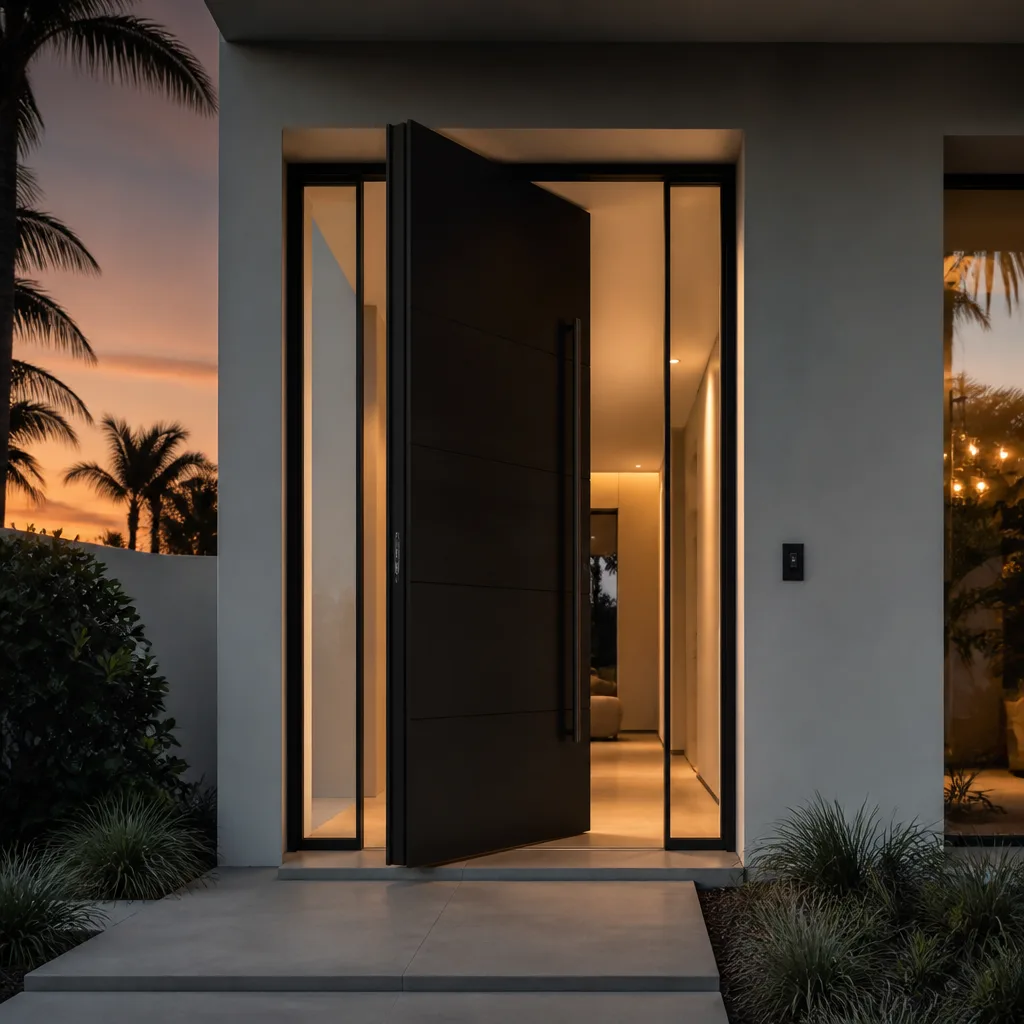
Call for inspection when you observe between-the-pane condensation, frame corrosion with white oxide or pitting, any door that requires lifting the handle to latch, water stains that persist after weep cleaning, or cracks that extend from the window corner into the wall. These symptoms cross from homeowner maintenance into technical diagnosis.
Structural indicators, diagonal wall cracks, seasonal gap changes at door frames, or multi-opening pattern failure require prompt professional evaluation to prevent cost escalation. The repair-versus-replace decision depends on measurements most homeowners don’t have the tools or reference values to assess accurately.
Sightline Windows & Doors West Palm Beach offers free estimates in West Palm Beach. Every visit includes a measured survey you keep, a written scope with line-item pricing, and a documented photo record. Our technicians are background-checked, uniformed, and identified by license number before arrival. Call (561) 354-3861 to schedule. We also provide a free second opinion on any written estimate from another contractor.
Frequently Asked Questions
Common repairs range from $120 for weep system cleaning to $780 for impact-rated IGU replacement. Full replacement for a standard double-hung window runs $800-$1,400; impact-rated replacement ranges $1,200-$2,400 depending on size, DP rating, and installation conditions. Call (561) 354-3861 for an exact quote on your specific opening; estimates are free.
Interior surface condensation in summer is caused by warm, humid indoor air contacting glass cooled by air conditioning below the dew point. It is not seal failure. Reduce indoor humidity below 55% with exhaust fans, dehumidification, or HVAC adjustment. Replacing the window will not change this physics. Between-the-pane fog, however, indicates seal failure and requires IGU replacement.
No. Haven Clause 1 requires that the measured survey and the written quote are the same document. We do not start work without a written, line-item price that you approve. If hidden damage is discovered, we document it, stop, and present a revised scope for your approval before continuing. No surprises.
Yes. Replacement of windows and doors in Palm Beach County requires permitting for structural, egress, and HVHZ compliance verification. We pull permits, schedule inspections, and ensure sign-off. The permit record becomes part of your property’s documented history, valuable for resale and insurance.
Standard replacement of 10-15 openings in a typical West Palm Beach home requires 2-3 days of installation after permit approval and material delivery. Custom sizes, impact-rated products with longer lead times, or stucco repair work extend this. We specify timeline in writing with your quote, not after contract.
If any aspect of our installation is not done right, we make it right within 365 days. This is written into the Haven Standard that governs every job, not a verbal courtesy. The promise is stamped on your documentation, not offered as a promotion. It covers workmanship, materials, and operational function.
The Bottom Line
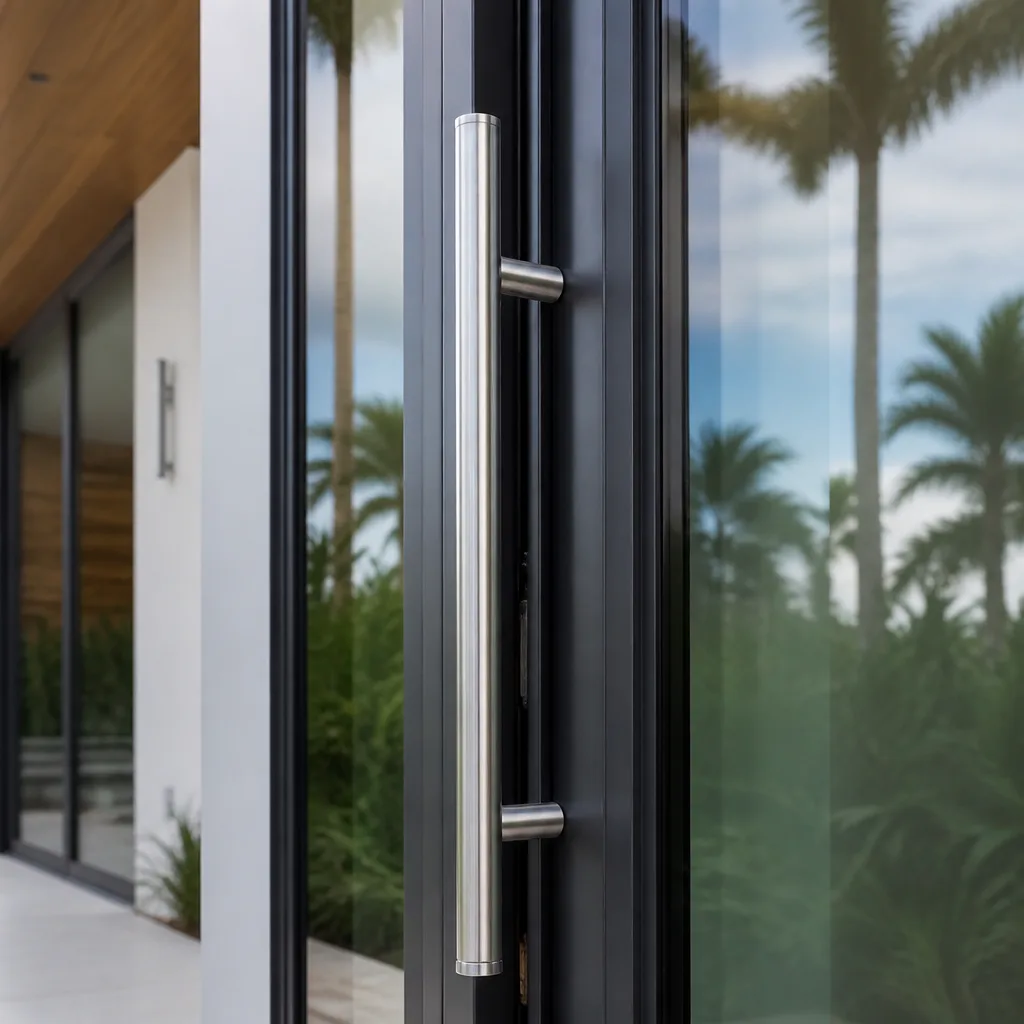
Window and door warning signs in West Palm Beach require climate-specific interpretation. Interior summer condensation is humidity, not failure. Bottom rail water stains mean weep cleaning, not replacement. Roller wear precedes lock failure by measurable margins. The three structural warning signs, diagonal wall cracks, multi-opening patterns, and seasonal frame gaps, redirect the repair pathway entirely. Know the location, measure the play, document the pattern, and decide on cost thresholds, not default assumptions. Acting at first warning typically costs $150-$400; delaying 18 months often reaches $1,200-$3,500. The measured survey, written price, and photo record are the tools that separate informed decision from expensive guesswork.
Written by Sonia Raman, Owner at Sightline Windows & Doors West Palm Beach, serving West Palm Beach since 2012.