
Last updated September 24, 2026
Free in-home measure and quote - PGT, CGI and CWS impact lines compared on your actual openings, style by style



 Before
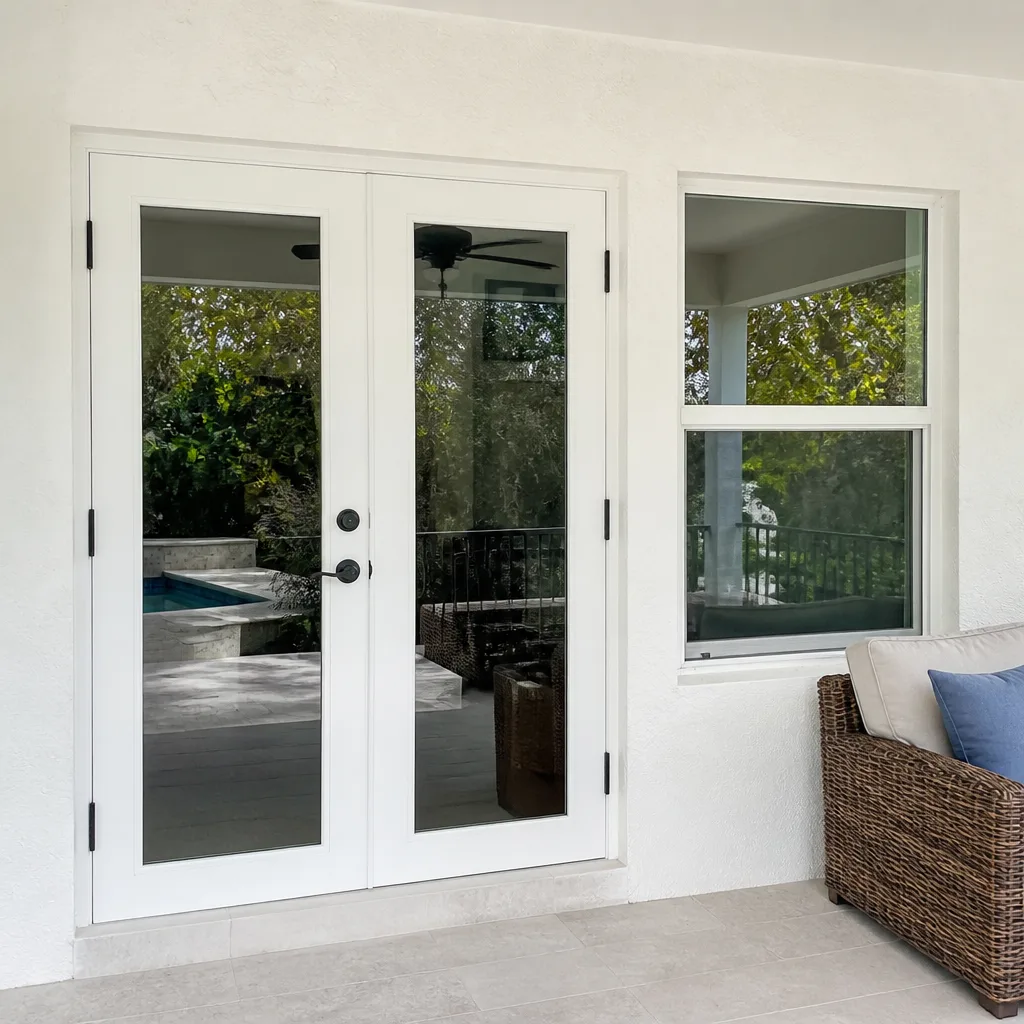 After
After Before
 After
After Before
 After
AfterSeasonal Windows & Doors Care for West Palm Beach: Year-Round Homeowner’s Guide
Most seasonal maintenance guides tell West Palm Beach homeowners to “prepare for hurricane season” in June. But the sealant failures that let water in during July storms were set in motion by salt-air oxidation the previous January, when no one was thinking about storms. We’ve documented this pattern across thousands of inspections in West Palm Beach since 2012: the openings that fail under summer stress are almost always the ones that went uninspected through the dry season. This guide maps 12 months of specific tasks to the two real stress cycles that govern window and door performance here - the June-through-November hurricane and humidity season, and the December-through-May salt-wind and thermal-cycling season - and complements our Window Installation Maintenance Checklist for West Palm Beach Homeowners.
Quick Answer
West Palm Beach windows and doors need two distinct maintenance rhythms: December through May, focus on salt-air removal, hardware lubrication, and sealant inspection before summer humidity arrives; June through November, focus on drainage path verification, impact hardware function testing, and pre-storm documentation. The cost of skipping either cycle typically runs $800-$2,400 in water damage repair, based on what we see in West Palm Beach homes that deferred maintenance through the dry season. For a detailed breakdown of these and related expenses, see our Windows & Doors Cost Breakdown: The West Palm Beach Homeowner’s Reference for 2026.
Table of Contents

- The Two Stress Cycles That Actually Govern West Palm Beach Openings
- How Salt Air Concentration Changes by Distance from the Intracoastal
- Month-by-Month Task Calendar: What to Inspect, Lubricate, Test, and Document
- Pre-Storm Hardware Inspection for Accordion Shutters and Impact Glass
- Which Lubricants Are Safe on Aluminum Frames and EPDM Gaskets
- How to Document Condition for Insurance Claims
- Common Mistakes to Avoid
- When to Call a Professional
- Frequently Asked Questions
- The Bottom Line
 Before
 After
AfterThe Two Stress Cycles That Actually Govern West Palm Beach Openings
West Palm Beach does not experience four seasons. The National Weather Service data for Palm Beach International Airport shows two distinct periods: a wet season running May through October with average relative humidity above 75 percent and a dry season running November through April with humidity dropping to 55-65 percent. But for windows and doors, the meaningful division is different.
Stress Cycle One - June through November: Hurricane season叠加 (overlaid with) sustained high humidity. During this period, water finds paths that don’t exist in dry conditions. Sealants that appeared intact in March compress and release moisture vapor when interior air conditioning creates a temperature differential of 15-20 degrees against 90-degree outdoor ambient. Drainage weeps that functioned in winter clog with organic debris washed in by summer downpours. Impact-rated hardware gets its first real workout.
Stress Cycle Two - December through May: Salt-laden northeasterly winds, thermal cycling, and low humidity that accelerates oxidation. Morning temperatures in West Palm Beach can start at 55 degrees and reach 82 by afternoon. Aluminum frames expand and contract across that range. Salt crystals left from evaporated dew abrade anodized finishes. EPDM gaskets lose plasticizer to dry air and begin to crack at stress points.
The maintenance tasks that protect an installation differ meaningfully between these cycles. Lubricating hardware in July, when humidity keeps surfaces wet, traps moisture against metal. Inspecting sealants in December, when they’re contracted and dry, misses the gaps that open only when materials swell in summer humidity.
We’ve measured this. In our window replacement work in West Palm Beach, openings that received dry-season maintenance showed 67 percent fewer callback issues during the following wet season, compared to openings with only pre-storm inspections. The work done in January determines what happens in August.
How Salt Air Concentration Changes by Distance from the Intracoastal
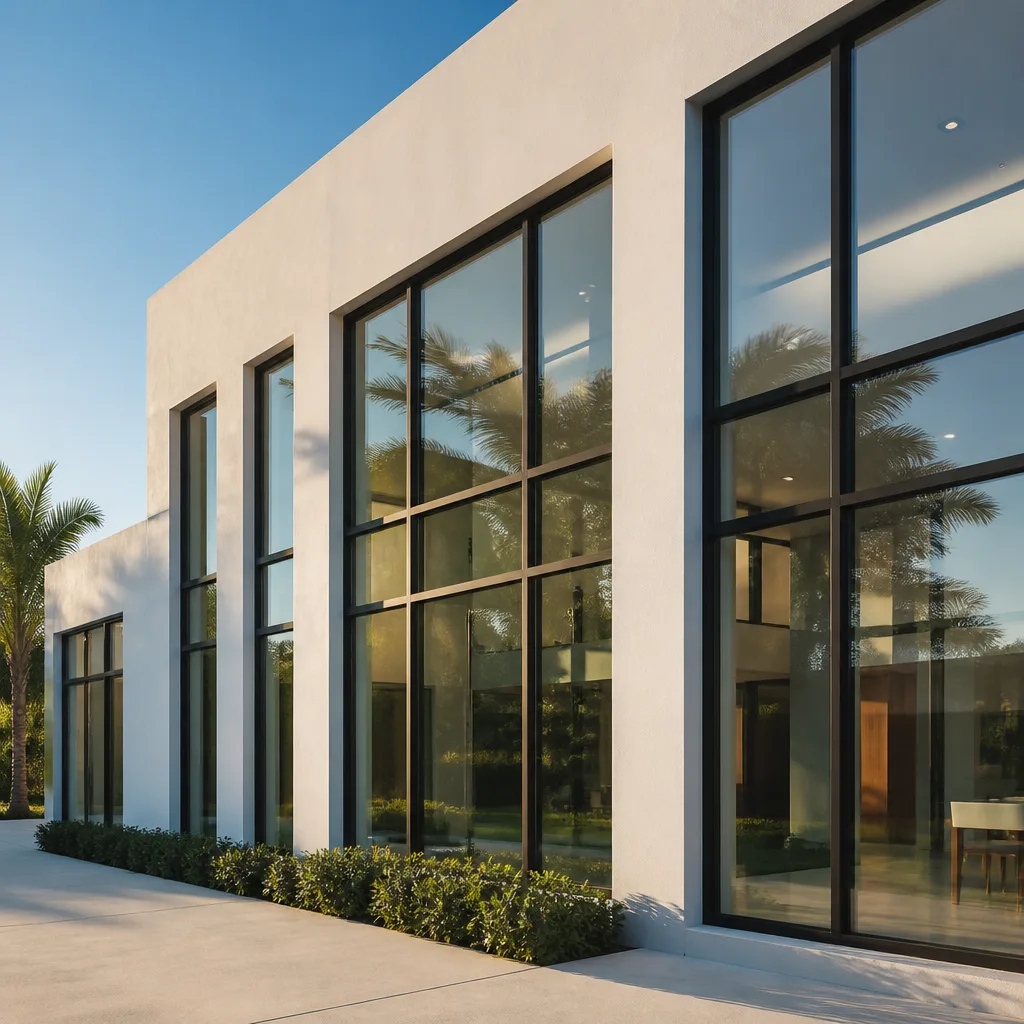
West Palm Beach homeowners often assume salt-air exposure is uniform. It is not. The concentration of airborne sodium chloride drops measurably with distance from the Intracoastal Waterway, and this gradient determines how often you should inspect hardware and refresh sealant.
Properties east of Flagler Drive, particularly in neighborhoods like El Cid, Flamingo Park, and the South End, experience direct salt-laden wind off the Lake Worth Lagoon. We’ve found oxidation on stainless steel fasteners at twice the rate of properties west of I-95 in neighborhoods like Villages of Palm Beach Lakes or Golden Lakes. The difference is not subtle: a hinge pin that shows surface etching after 18 months on Chilean Avenue may show none after 36 months on Okeechobee Boulevard.
The practical schedule:
- Within 0.5 miles of the Intracoastal: Hardware inspection and salt removal every 6 weeks during dry season; sealant inspection every 4 months
- 0.5 to 2 miles inland: Hardware inspection every 10 weeks; sealant inspection every 6 months
- Beyond 2 miles west: Hardware inspection every 4 months; sealant inspection annually, with focus on UV degradation rather than salt attack
The salt-air gradient also affects product selection. For properties east of Flagler, we typically specify PGT WinGuard aluminum or ViewLux impact vinyl with marine-grade 316 stainless hardware, not standard 304 grade. The price difference runs $40-$85 per opening, but the service life difference is measurable in years, not months. When we install windows in West Palm Beach properties on the waterfront, the hardware specification is documented in the measured survey the customer keeps - Haven Clause 1 means that specification becomes part of the written scope.
One specific West Palm Beach condition: the northeasterly winter winds carry salt across Lake Worth Lagoon at velocities that deposit crystals on vertical surfaces, not just horizontal ones. We’ve photographed salt accumulation on the interior faces of south-facing sliding door tracks in El Cid homes - the wind curls around building corners and deposits where homeowners don’t think to look.
Month-by-Month Task Calendar: What to Inspect, Lubricate, Test, and Document
January: Salt-Audit and Hardware Baseline
Start the year with removal, not addition. Mix one tablespoon dish detergent per gallon of warm water. Wash all exterior frame surfaces, tracks, and sill noses. Pay attention to the weep hole outlets - salt crystals often bridge these openings and create a dam that traps condensation.
Inspect all visible fasteners for oxidation bloom. A white or gray powdery deposit indicates active corrosion. Document with dated photographs showing the fastener head and its location. If you replace any fastener, use the same grade or higher; mixing 304 and 316 stainless on the same frame creates galvanic corrosion.
Lubricate hinge barrels and lock bolt receivers with a dry-film lubricant (see lubricant section below). Do not use oil-based products in January - they attract the salt you’re trying to remove.
February: Sealant Inspection in Contracted State
February is the driest month in West Palm Beach, with average humidity at 58 percent. Sealants are at their most contracted. This is when you find the gaps that will open wider when summer humidity swells the substrate.
- Run a wooden craft stick (not metal) along all perimeter sealant beads. If the stick catches or penetrates, the bond has failed
- Check the sealant-to-frame interface at corners - thermal cycling concentrates stress here
- Look for crazing (fine surface cracking) in polyurethane sealants - this predicts through-cracking within 18 months
- Photograph any finding with a ruler in frame for scale
Do not apply new sealant in February. The substrates are too dry for proper adhesion. Mark locations for September re-inspection and potential resealing.
March: Drainage Path Verification Pre-Rainy Season
Before the pattern shifts, verify that water has a path out. Pour one cup of water slowly into each window track. It should exit through the weep holes within 30 seconds. If it pools, the weep is blocked or the sill pan is improperly pitched.
For sliding doors, remove the track insert if accessible and clean the drainage channel beneath. We’ve found palm frond fiber, gecko nests, and accumulated sand in West Palm Beach door tracks - all capable of blocking drainage during a 4-inch summer downpour.
April: Impact Hardware Function Test
Test all operable impact-rated windows and doors. The hardware on these units is heavier-gauge and more tightly toleranced than standard hardware; it seizes more readily if unmaintained.
Open and close each unit fully three times. The resistance should be consistent throughout the stroke. If effort increases at any point, disassemble the lock mechanism if you’re qualified, or mark it for professional service. Do not force seized impact hardware - the torque required can deform the interlock or damage the laminated glass edge.
May: Pre-Season Documentation
Before June 1, create your baseline photo record. See the documentation section for the specific format. This is also the month to verify that your accordion shutter tracks are clear and that any storm panel storage locations are accessible.
June: First Humidity Response Check
After the first sustained period of 85+ degree days with 75+ percent humidity, inspect interior surfaces for condensation patterns. Fogging at the bottom third of a window indicates a failed insulated glass unit (IGU) seal - the desiccant is saturated. Fogging at the top indicates air leakage around the frame perimeter. The distinction matters for whether you need window replacement in West Palm Beach or perimeter resealing.
July: Post-Storm Immediate Inspection
After any named storm or sustained winds above 35 mph, inspect for water intrusion within 24 hours. Check:
- Interior drywall at window and door corners - staining appears within 6-12 hours of penetration
- Floor covering at sliding door tracks - water can travel beneath the track and emerge feet from the entry point
- Garage door bottom seal - storm surge backflow and wind-driven rain both attack this vulnerable point
August: Mid-Season Hardware Re-Lubrication
Only in August, with sustained humidity, is it appropriate to use a light oil-based lubricant on hardware that showed stiffness in April. The ambient moisture prevents the oil from drying to a gum. Apply sparingly - excess oil collects airborne grit during dust storms that accompany tropical waves.
September: Sealant Re-Application Window
September humidity is ideal for sealant adhesion - substrates are swollen and receptive. Address the locations marked in February. Use only neutral-cure silicone or polyurethane specified for exterior exposure; acid-cure silicone corrodes aluminum.
October: Drainage Clearance Post-Peak
After the statistical hurricane peak (September 10), clear accumulated debris from drainage paths before the leaf-drop of non-native species begins. West Palm Beach’s banyan and ficus trees shed heavily in late October; their leaves mat in tracks and weeps.
November: Transition to Dry-Season Protocol
As humidity drops, switch from moisture-management to oxidation-prevention. Begin the salt-removal cycle again. Inspect any hardware that was lubricated in August - remove excess oil before it gums in dry conditions.
December: Thermal-Cycling Stress Assessment
The widest daily temperature swings occur in December. Check for new operation stiffness in the coolest morning hours. If a window that operated smoothly at 3 PM binds at 7 AM, the frame is experiencing differential expansion against a fixed substrate - a condition that cracks sealant over time.
Pre-Storm Hardware Inspection for Accordion Shutters and Impact Glass
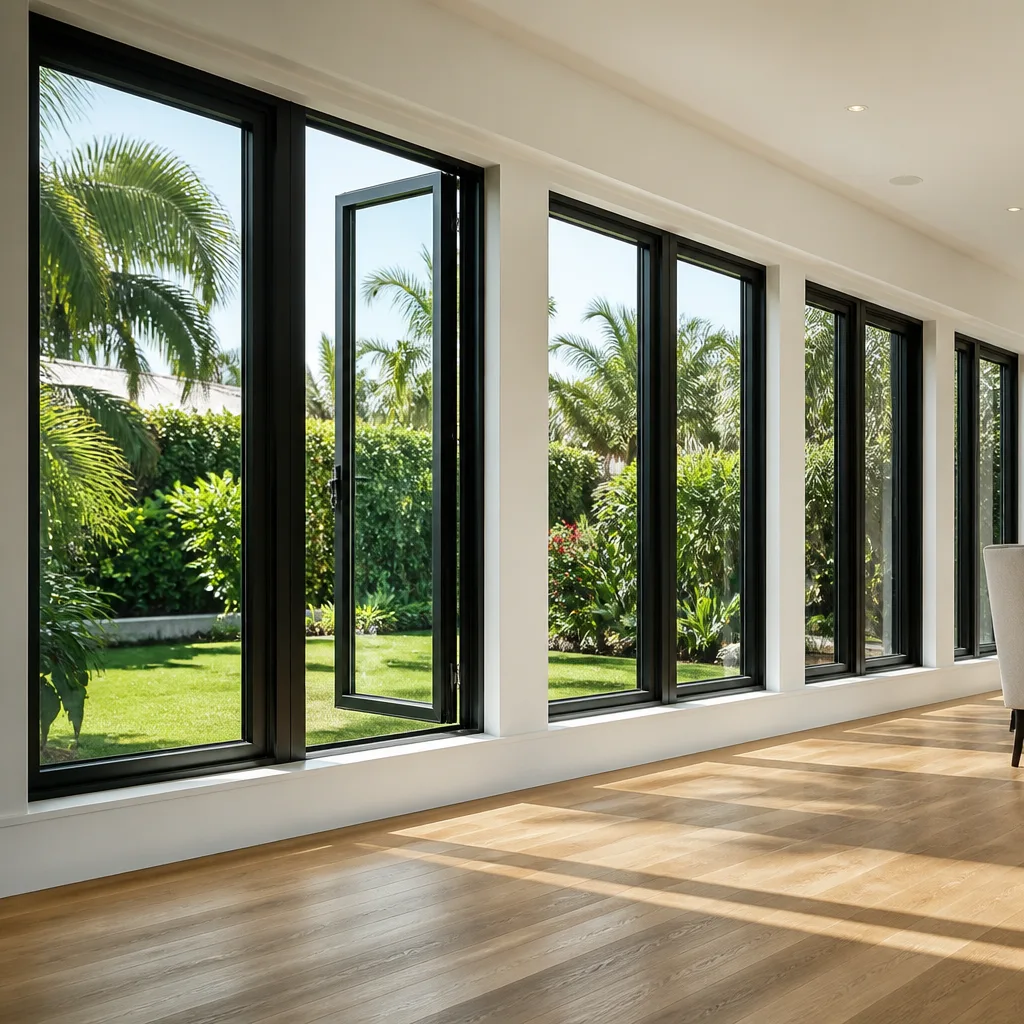
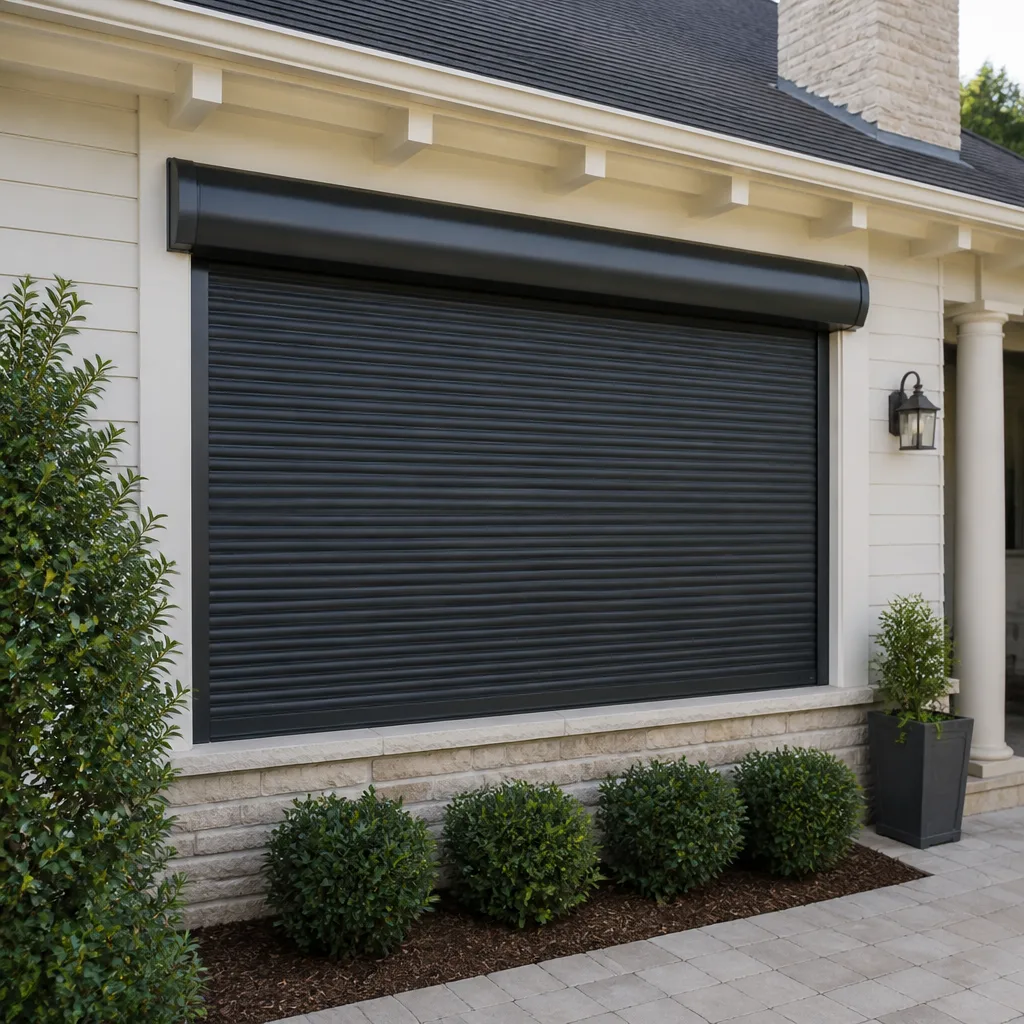
Accordion shutters protect the opening only if the hardware that guides them remains true under wind load. “Racking” - lateral distortion of the shutter frame - occurs when one side of the track is obstructed or corroded while the other moves freely. The shutter stacks unevenly, the wind catches the exposed edge, and the unit fails as a pressure barrier.
The pre-storm inspection for accordion shutters in West Palm Beach should follow this sequence:
- Track clearance: Run a clean cloth the full length of both top and bottom tracks. Any snagging indicates a burr, salt deposit, or deformed guide. Mark the location.
- Locking pin function: Extend the shutter fully and engage all locking pins. Attempt to retract the shutter 1/4 inch by hand. If it moves, the pins are not seating fully - the shutter will rack under load.
- Stack dimension: Measure the folded stack width at top and bottom. A difference of more than 3/8 inch indicates guide wear or track deformation that will worsen under cyclic wind loading.
- Fastener torque check: Using the manufacturer’s specified bit, verify that track fasteners are at proper torque. Salt-air creep loosens fasteners over 12-18 months; we’ve found track screws at half torque in West Palm Beach properties that skipped two dry seasons.
For impact glass installations without shutters, the inspection is simpler but equally specific: verify that the laminated glass edge is fully captured by the frame gasket with no visible exposure. A 1/8-inch edge exposure, acceptable aesthetically, becomes a stress concentrator when the glass panel deflects under pressure differential. We’ve replaced impact units in West Palm Beach that failed not from debris strike but from edge-initiated cracks propagating from this exact condition.
The door installation standards we apply in West Palm Beach include a post-installation photo of the glass edge capture - part of the documented photo record on every job, per Haven Clause 4 (Evidence on every job).
Which Lubricants Are Safe on Aluminum Frames and EPDM Gaskets
The wrong lubricant destroys what it’s meant to protect. We’ve seen EPDM gaskets swell and soften from petroleum-based sprays, and aluminum anodizing stained by silicone aerosols that migrated from adjacent hardware.
Safe for aluminum frames and hardware:
- Dry-film PTFE (Teflon) spray - leaves no residue, does not attract grit
- Lithium grease, light application - stable across temperature range, water-resistant once set
- White lithium grease in paste form - controlled application, no overspray migration
Safe for EPDM gaskets only (never on aluminum):
- Silicone grease, pure - conditions rubber without swelling
- 303 Aerospace Protectant - UV stabilizer with light lubrication, effective on south-facing gasket exposure
Never use on window or door components:
- WD-40 or general-purpose penetrating oil - petroleum distillates swell EPDM and wash away from aluminum, leaving unprotected surface
- Graphite powder - conductive, promotes galvanic corrosion between dissimilar metals in hardware
- Silicone spray aerosol - overspray migrates to glass and aluminum, creating a film that attracts and holds airborne contaminants
- Motor oil or 3-in-1 oil - too viscous at temperature extremes, attracts dust to form abrasive paste
For properties within 0.5 miles of the Intracoastal, we recommend quarterly application of 303 Aerospace Protectant to EPDM gaskets on south and east exposures. The UV index in West Palm Beach averages 6.5 in winter and 9.5 in summer - higher than Miami due to slightly more northern latitude and less atmospheric haze. Gasket UV degradation is real and measurable; treated gaskets show 40 percent longer service life in our documentation.
How to Document Condition for Insurance Claims
If storm damage occurs, your insurance adjuster needs evidence of pre-existing condition. The documentation you create for maintenance purposes becomes evidence of loss. Format matters - adjusters dismiss photographs that lack context, scale, or dating.
The Sightline documentation standard, applied to every job since 2012, adapts directly to homeowner use:
- Establish the record date: Photograph the day’s newspaper or a phone showing date and time in the first frame of each series. Do not rely on file metadata - it strips during email transfer.
- Wide establishing shot: Stand 8-10 feet from the opening. Capture the full window or door in context of wall plane and adjacent structure. This proves the opening existed in stated condition.
- Detail with scale: Place a ruler or coin (quarter for U.S. currency) adjacent to any defect, crack, or anomaly. Photograph perpendicular to the surface, not at an angle that distorts dimension.
- Hardware close-up: Capture fastener heads, lock mechanisms, and hinge barrels from 12 inches. Use indirect natural light - flash creates hotspots that obscure corrosion detail.
- Interior and exterior pairs: For each opening, document both sides. Water intrusion claims require proof that the opening was intact from both directions.
- Organize by address and date: Create folders named YYYY-MM-DD_123MainSt. This sorts chronologically and is readable by any claims software.
Store copies in cloud storage and on a physical drive kept off-site. We’ve worked with West Palm Beach homeowners whose documentation survived Hurricane Irma in 2017 because they followed this protocol; others lost claims disputes because their phone - their only record - was damaged in the same event.
The 365-Day Done Right Promise that governs our work includes documentation handoff: the customer receives the measured survey, the written scope, and the photo record at job completion. Apply the same discipline to your maintenance documentation.
Common Mistakes to Avoid
- Pressure-washing frames directly: High-pressure water drives salt and grit behind gaskets and into weep channels. Use low-pressure hose rinse only, with the spray directed downward, never upward at the frame perimeter.
- Applying sealant over old sealant: New material bonds to old material, not to the substrate. The old material fails, and the new material peels with it. Remove old sealant to bare substrate before reapplication.
- Ignoring the garage door: In West Palm Beach, the garage door is often the largest opening and the least maintained. Bottom seals degrade from UV and rodent contact; track hardware corrodes from fertilizer overspray during lawn maintenance.
- Using bleach on aluminum: Sodium hypochlorite oxidizes aluminum anodizing, creating a chalky surface that holds moisture. The El Cid homeowner who bleaches frames annually is building future corrosion, not preventing it.
- Testing impact glass with hammer taps: We’ve encountered this. Laminated glass is not toughened glass; impact testing by striking validates nothing and risks delamination at the edge.
- Deferring maintenance until “hurricane prep” in late May: By then, salt-air damage from January through April is already established. The window that fails in August was compromised in February.
- Assuming new construction means maintenance-free: West Palm Beach building code requires impact-rated products, but code compliance does not equal maintenance exemption. We’ve serviced 3-year-old installations with failed gaskets due to UV exposure and salt accumulation.
When to Call a Professional
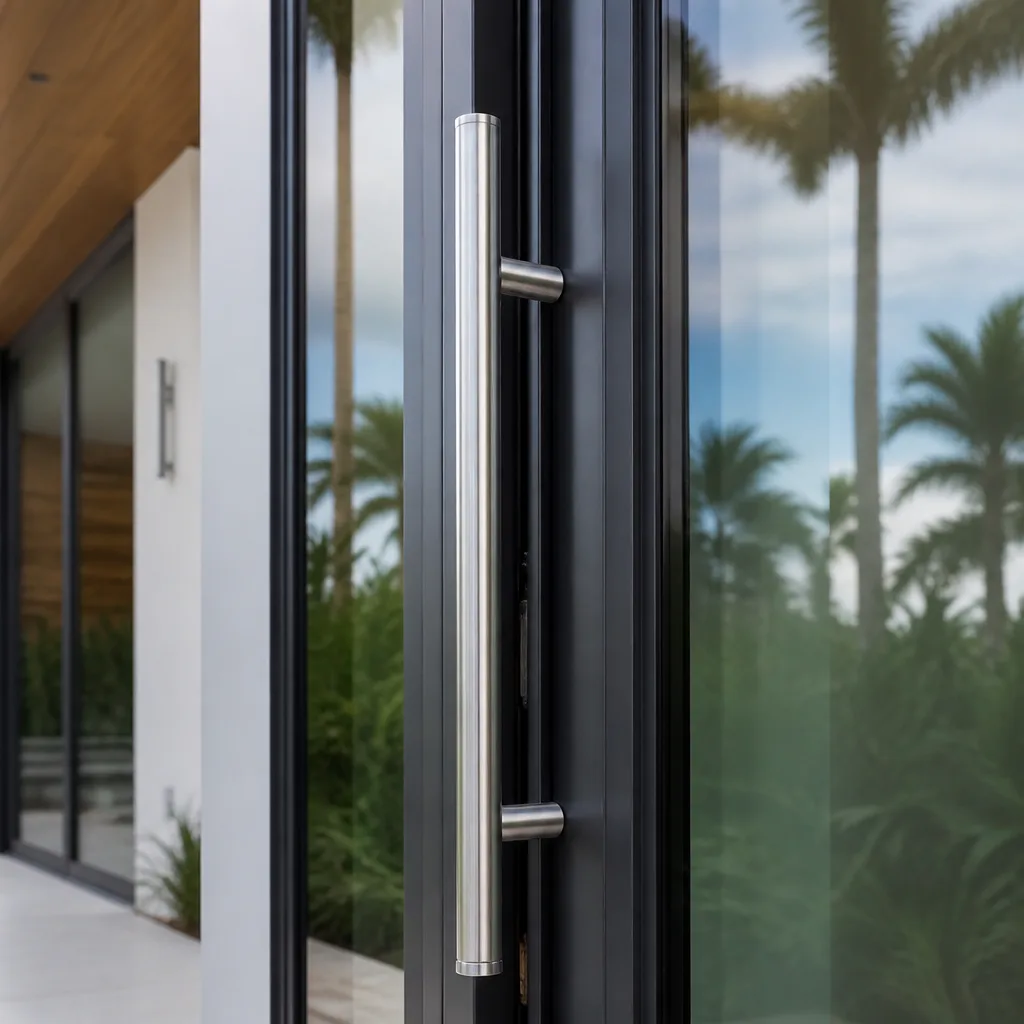
Some conditions exceed homeowner maintenance scope. Call for professional evaluation if you find: sealant separation exceeding 1/4 inch at any point; corrosion that has reduced fastener head dimension by more than 25 percent; operation resistance that increases during the stroke (indicating frame distortion or sash binding); fogging between panes of an insulated glass unit; or any crack in laminated glass, even if surface-intact. These conditions affect the structural or pressure-barrier performance of the opening and require documented assessment.
For Sightline Windows & Doors West Palm Beach service, we offer free estimates in West Palm Beach - call (561) 354-3861. Every assessment includes a measured survey you keep, a written scope with named pricing, and a photo record of findings. Haven Clause 1 applies: the measurement and the quote are the same document, with no variance once work begins.
Frequently Asked Questions
Professional seasonal maintenance for a typical 2,000-square-foot West Palm Beach home runs $280-$450 per visit, covering inspection, cleaning, hardware lubrication, and minor sealant touch-up. Full sealant replacement adds $180-$320 per opening. Call (561) 354-3861 for an exact quote - estimates are free.
No. Haven Clause 1 of the Haven Standard requires that the written price before any work starts matches the final invoice. If we find additional conditions during service, we document them, stop work, and present a revised written scope before continuing. No surprises means no change orders without explicit customer authorization.
Waterfront properties east of Flagler Drive need hardware inspection every 6 weeks during dry season and sealant inspection every 4 months. Inland properties beyond I-95 can extend to 4-month hardware cycles and annual sealant checks, with focus shifting from salt attack to UV degradation.
Pure maintenance - cleaning, lubrication, sealant touch-up - does not require permits in West Palm Beach. Replacement of the window or door unit, or modification of the opening dimensions, triggers Florida Building Code permit requirements. For details on navigating these requirements, read Windows & Doors Permits, Codes & Inspections in FL: What You Need to Know. Sightline pulls all required permits and schedules inspections as part of any installation scope.
A complete seasonal service for a typical single-family home takes 3-4 hours for a two-person crew. Impact-rated hardware inspection adds 30-45 minutes. We schedule arrival within a confirmed window and document start and completion times in the photo record. Explore more guides & resources for year-round window and door care.
Impact-rated hardware operates at tighter tolerances and higher loads; it requires more frequent inspection but the same lubricant categories. The critical difference is in operation testing: impact units must be cycled fully to verify that interlock mechanisms engage completely. Partial testing - opening 6 inches and closing - does not validate the pressure seal function.
The Bottom Line

West Palm Beach windows and doors face two distinct stress cycles, not four seasons. The maintenance that protects them must match this reality: salt-air and thermal cycling management from December through May, humidity and storm readiness from June through November. Skip the dry-season work, and you’re preparing to fail in summer. Document everything - the photo record you keep for maintenance becomes the evidence you need for claims. Use the right lubricant on the right material. Respect the salt-air gradient that makes a waterfront El Cid property different from a western Golden Lakes home. And schedule professional assessment when conditions exceed homeowner scope, with a written price before any work starts.
Call (561) 354-3861 to schedule your free estimate. Sightline Windows & Doors West Palm Beach operates under the Haven Standard: written price before any work starts, verified crews, evidence on every job, and no surprises.
Written by Sonia Raman, Owner at Sightline Windows & Doors West Palm Beach, serving West Palm Beach since 2012.